
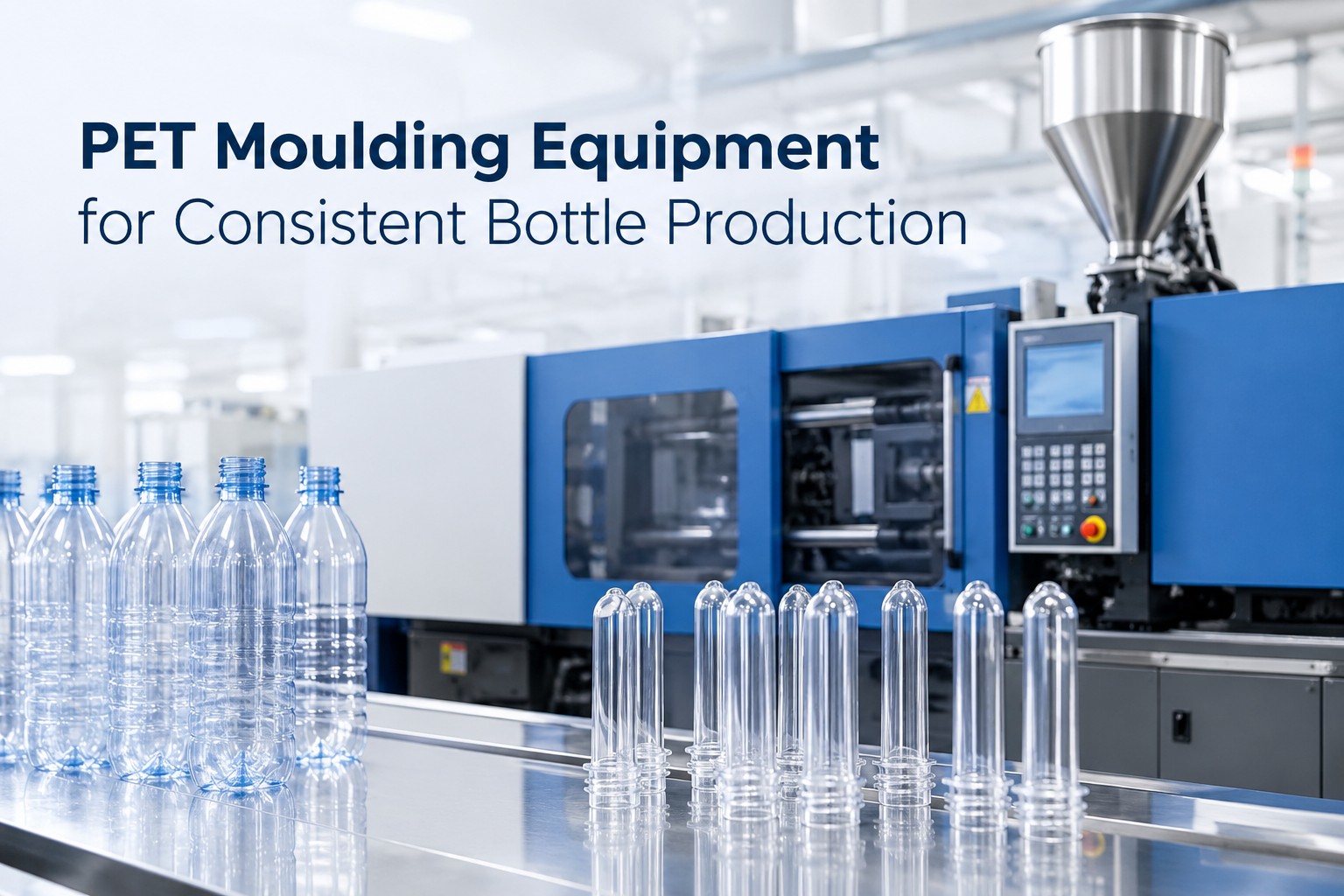
PET packaging demands precision at every stage of production. From preform quality and material preparation to heating, moulding, cooling, and cycle control, small process variations can influence the appearance, strength, and dimensional consistency of the finished product. For manufacturers evaluating equipment, understanding the relationship between machine configuration and production requirements is essential. Esemplast Avinya operates in the plastics machinery segment, where selecting suitable technology can help manufacturers build reliable production processes. Even a simple – in the initial search specification can signal the need to clarify the exact application, output target, and material requirements before choosing equipment.
Understanding PET Processing Requirements
PET has specific processing characteristics that distinguish it from many other thermoplastics. Moisture control, heating conditions, material residence time, injection parameters, and cooling all require appropriate attention.
The required equipment depends heavily on the product being manufactured. A facility producing standard beverage preforms may have different priorities from one making containers for household, pharmaceutical, or specialty applications.
Before selecting machinery, manufacturers should establish:
- Expected production volume
- Preform or container specifications
- PET material grade
- Required cycle time
- Mould dimensions and configuration
- Available floor space
- Energy and utility requirements
Defining these factors helps prevent a mismatch between machine capability and actual production needs.
Evaluating Equipment for PET Production
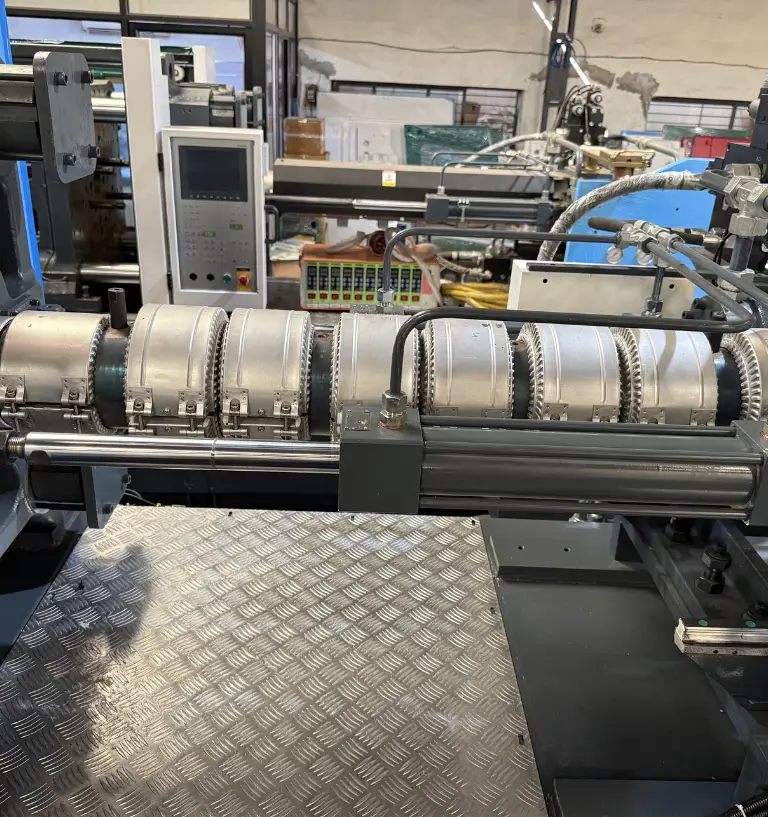
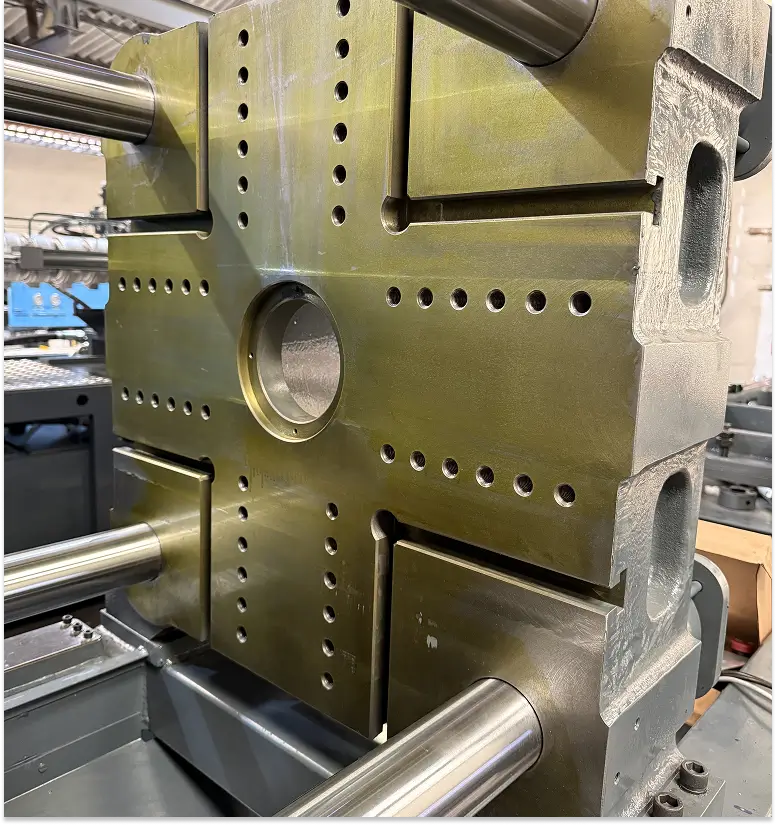
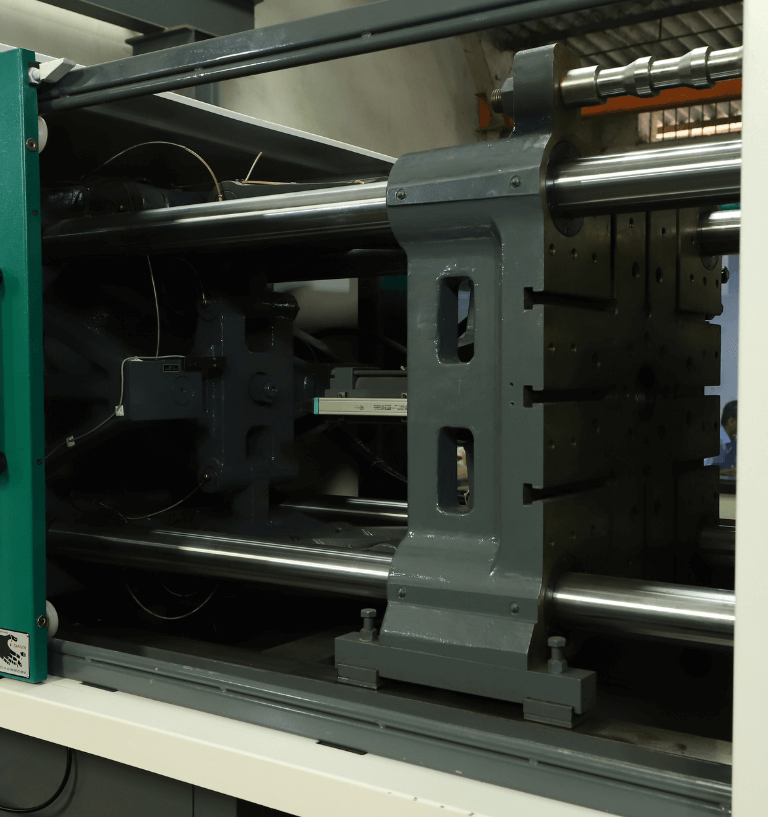
When comparing a pet injection moulding machine in india, buyers should look beyond nominal output. Injection capacity, clamping force, screw design, temperature control, and automation compatibility can all influence suitability.
PET processing requires consistent thermal management because the material must reach appropriate processing conditions without unnecessary degradation. Injection speed and pressure also need to correspond with the mould and product design.
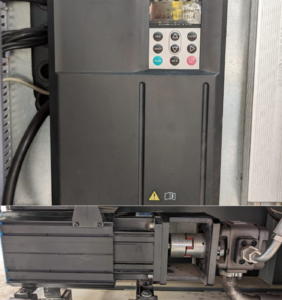
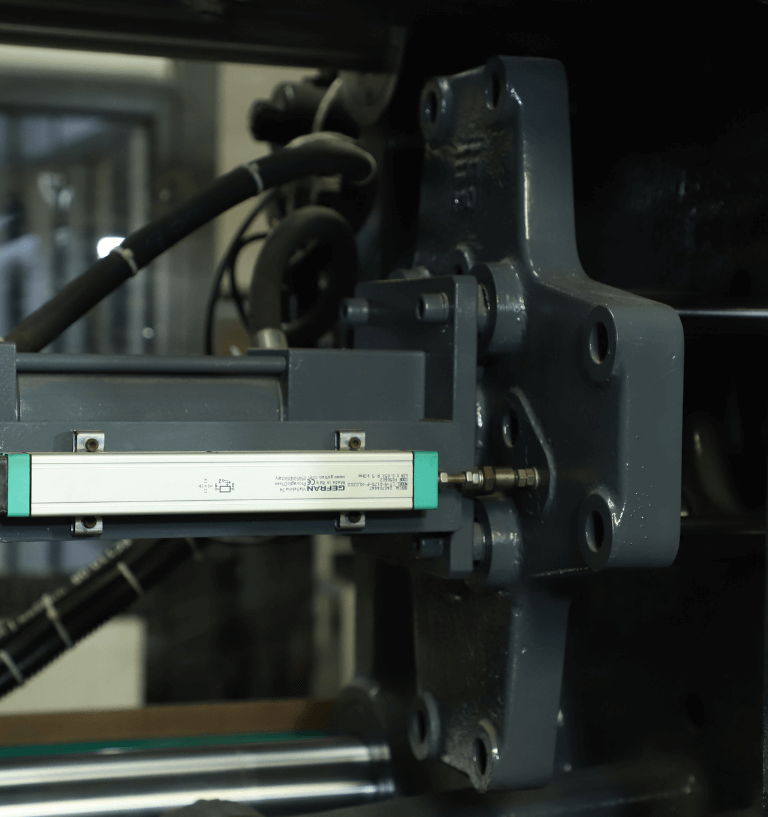
Control systems are another important consideration. The ability to monitor and adjust process parameters can help manufacturers maintain repeatable cycles and identify deviations during production.
| Evaluation factor | Why it matters |
| Injection capacity | Determines suitability for the required shot size |
| Clamping force | Supports secure mould closure during injection |
| Temperature control | Helps maintain stable material processing conditions |
| Cycle performance | Influences production output and efficiency |
| Automation compatibility | Can reduce manual handling where appropriate |
| Maintenance access | Affects servicing time and operational continuity |
A complete evaluation provides a more useful comparison than focusing on one specification.
Maintaining Quality Across Production Cycles
Consistent output depends on more than the machine itself. Material preparation, mould condition, process settings, cooling, and operator practices can all affect finished components.
PET is particularly sensitive to moisture. Proper material handling and drying practices are therefore important before processing. Inadequate preparation can contribute to quality problems and affect the behaviour of the material during moulding.
Process monitoring can help manufacturers identify changes in temperature, pressure, injection speed, or cycle conditions. Maintaining suitable parameters across production runs supports greater repeatability.
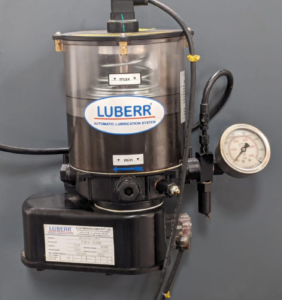
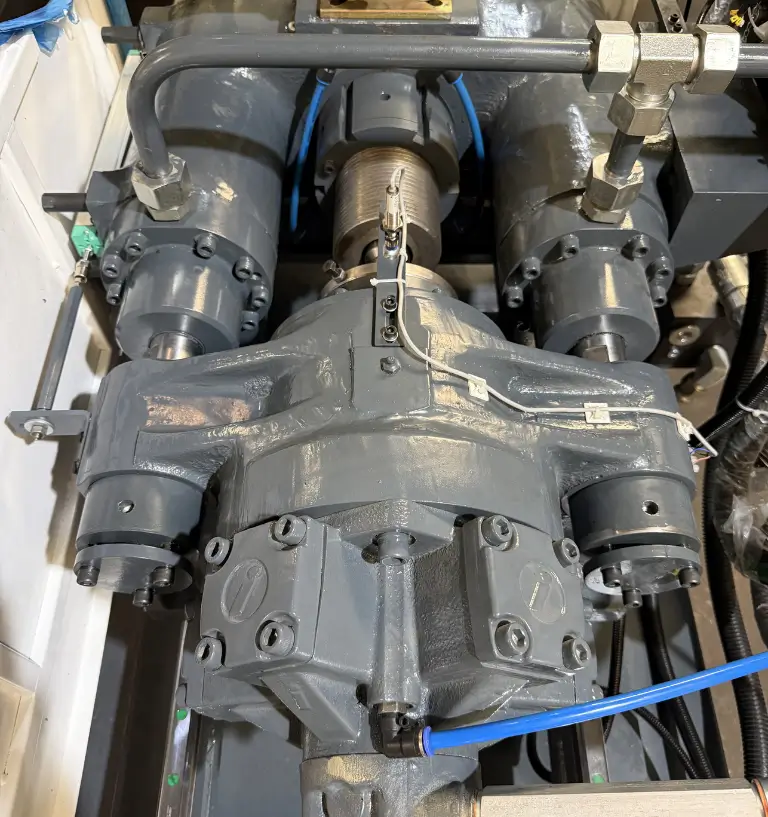
Preventive maintenance also has a role. Regular inspection of heaters, sensors, electrical components, hydraulic systems, lubrication points, and other critical areas can help identify developing problems before they result in unplanned downtime.
Choosing a Suitable Equipment Partner
Manufacturers researching pet injection moulding machine manufacturers should assess technical capability alongside service and application understanding. The right supplier should be able to discuss the relationship between the machine, mould, material, product requirements, and expected production conditions.
Buyers can make supplier comparisons more meaningful by asking about:
- Machine configuration and operating range
- Installation and commissioning support
- Operator training
- Preventive maintenance requirements
- Spare-parts availability
- Technical assistance
- Potential future upgrades
It is also useful to consider whether the equipment can accommodate realistic changes in production. Growing businesses may eventually require higher output, additional mould configurations, or greater automation. Planning for these possibilities can prevent premature equipment replacement.
Looking Beyond the Initial Purchase
The purchase price should not be the only financial consideration. Energy consumption, maintenance, downtime, replacement components, training, and operating efficiency can all contribute to total ownership costs.
A practical comparison should estimate how each machine performs under the manufacturer’s expected production conditions. Buyers can then assess not only acquisition cost but also anticipated operating expenses over the equipment’s useful life.
Production environment is another factor. Available utilities, floor layout, material movement, ventilation, operator access, and maintenance space should be considered before installation.
FAQs
What should be considered when selecting PET moulding equipment?
Material requirements, product specifications, production volume, cycle time, mould dimensions, machine capacity, energy use, and maintenance needs should all be assessed.
Why is moisture control important for PET?
Moisture can affect PET during processing and may contribute to undesirable material behaviour or finished-product quality issues.
Does machine speed determine production efficiency?
Not by itself. Cycle consistency, material preparation, mould performance, cooling, downtime, and process stability also influence overall productivity.
How important is technical support after installation?
It can be important for commissioning, operator training, troubleshooting, maintenance planning, and keeping equipment operating reliably.
Should future production needs influence the purchase?
Yes. Anticipated changes in product specifications, output, automation, or mould requirements can help manufacturers select equipment with appropriate flexibility.
Conclusion
Reliable PET production requires a coordinated approach to machinery, materials, moulds, process control, and maintenance. Instead of selecting equipment solely according to advertised capacity, manufacturers should assess how its specifications align with their actual production conditions. A well-matched pet injection moulding machine can support repeatable cycles, consistent product quality, and efficient operations when combined with appropriate material preparation and process management. The strongest purchasing decision is ultimately one based on technical suitability, lifecycle costs, and practical production objectives.
No comment